Baton Rouge Dentist

Ryan P. Perry, DDS
  • Home
  • About Us
    • About Our Office
    • Meet Dr. Perry
    • Request an Appointment
    • Office Hours
    • Map and Directions
    • Financial Policies
    • Free Initial Exam
  • Payment
  • Cosmetic Dentistry
    • Porcelain Veneers
    • Porcelain Crowns
    • Teeth Whitening
    • Dental Bonding
    • CEREC Crowns
    • White Fillings
  • ^
  • General Dentistry
    • Gum Disease
    • Root Canal Treatment
    • TMJ Dentist
    • Mercury Free Dentist
    • Gentle Dentistry
    • Emergency Dentist
    • Sedation Dentist
    • Pediatric Dentistry
    • Sleep Apnea
  • Reconstructive Services
    • Dental Implants
    • Dental Implants Cost
    • Affordable Dental Implants
    • Dental Bridges
    • Dental Bridge vs Implant
    • Dentures

Archives for August 2026

What Happens When Dental Problems Go Untreated?

Posted on August 31, 2026 by AllSmiles.

I’ve had severe tooth pain for about seven months, and I believe most, or all, of my teeth are badly infected or damaged. One of my front teeth is especially sensitive.

Eating has become very difficult. I mostly live on mashed potatoes, applesauce, and other soft foods, and I’ve lost 25 pounds since February.

My current HMO dental insurance doesn’t provide the coverage I need, and switching to a PPO would cost $60 more a month. I need to find a trustworthy dentist who can tell me what can be done. If I need dentures, I prefer snap-in dentures that I can keep in while eating and sleeping. – Thanks. TJ

TJ,

It can be discouraging to hear that you may need extensive dental treatment, especially when cost is a major concern. Implant-supported dentures can be an excellent solution for some patients, but they require a significant financial investment. If that type of treatment isn’t affordable, a traditional removable denture may be the more realistic alternative.

That doesn’t mean it’s the ideal solution for everyone. It simply means we sometimes must work within practical limitations.

Why Does Early Treatment Matter?

Teeth with plaque buildup and a dental instrument to remove it for gum disease treatment
Periodontal (gum) disease treatment can help prevent tooth loss

Most dental problems become more difficult and expensive to treat as they progress. The goal of routine dental care and preventive dentistry is to find issues while they are still manageable.

In general, treatment tends to progress through these stages:

  • Early decay treated with a filling
  • Deeper decay requiring more extensive restoration
  • Infection that may need root canal treatment
  • Structural damage requiring a crown
  • Gum disease
  • Tooth loss and replacement options

The earlier a problem is identified, the more treatment choices you typically have.

Does Every Severe Dental Case Result from Neglect?

While delayed treatment can contribute to serious dental problems, many factors affect oral health.

These may include:

  • Financial limitations
  • Lack of dental insurance
  • Medical conditions
  • Dental anxiety or fear
  • Limited access to care
  • Previous dental experiences

We recommend focusing on understanding all your available options and their long-term benefits and limitations. Even if some treatments are not financially possible right now, your dentist may be able to help you prioritize care and develop a plan that fits your circumstances. Afterward, preventive dentistry can help you maintain better oral health.

Baton Rouge dentist Dr. Ryan Perry sponsors this post. Read why many patients say he is one of the best dentists in Baton Rouge.
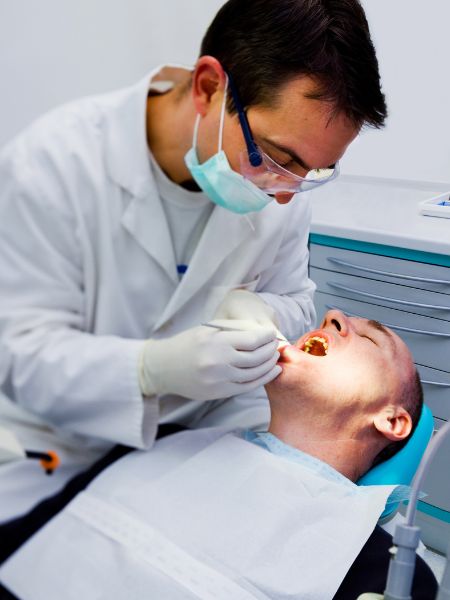
 

Filed Under: Preventive Dentistry Tagged With: affordable dental care, dental financing, haven't been to the dentist, lots of dental problems

How Do Dental Sedation and General Anesthesia Compare?

Posted on August 20, 2026 by AllSmiles.

A patient lying back, relaxed in a dental chair, as the dentist uses a tool in the patient's mouthA December 2025 news story about an Arizona patient who died after dental implant surgery raised understandable concerns about dental sedation. However, several important details help put this case into perspective.

What Type of Anesthesia Did the Oral Surgery Practice Use?

The oral surgeon’s practice offered local anesthesia, nitrous oxide, IV or “twilight” sedation, office-based general anesthesia, and hospital-based general anesthesia.

Based on the available information, the patient appears to have received office-based general anesthesia, which carries more risk than conscious sedation. Referring to all these options as “anesthesia” can give patients the wrong impression about their relative risks.

Conscious sedation, including nitrous oxide, oral sedation, and IV sedation, allows a patient to remain responsive. For an anxious patient, controlling fear and stress can also be an important part of providing safe dental care.

What Risk Factors Were Involved?

Further reporting indicated that investigators found several patient risk factors. Cannabis use before the procedure was specifically identified.

Cannabis can affect the airway and may increase the risk of complications such as a throat spasm during anesthesia. The Arizona Dental Board determined that the oral surgeon had not adequately considered the patient’s risk factors, including cannabis use. The Board required 12 hours of continuing education before restoring the surgeon’s anesthesia permit.

Why Does Medical Disclosure Matter?

We don’t have enough information to know everything that occurred before the procedure, including exactly what the patient disclosed or what instructions he received. For that reason, it would be unfair to place the entire responsibility for this outcome on either the patient or the dental team.

However, patients should disclose all prescription medications, recreational drugs, supplements, and other substances before receiving sedation or general anesthesia. The practice’s medical history forms instructed patients to report drug use, although cannabis was not specifically listed.

This case involved general anesthesia, not routine dental conscious sedation. Conscious sedation has a solid safety record when the dental team properly screens the patient, selects an appropriate level of sedation, monitors the patient, and has complete information about medications and drug use.

Baton Rouge dentist Dr. Ryan Perry sponsors this post. Read why many patients say he is one of the best dentists in Baton Rouge.

Filed Under: Sedation Dentistry Tagged With: dental implants sedation, IV sedation, medical disclosure dentist, nitrous oxide, Sedation Dentistry, sedation dentistry vs anesthesia

Phone number: 225-275-5910
9094 Jefferson Hwy
Baton Rouge, LA 70809
Ryan P. Perry, DDS
Phone: 225-275-5910
Ryan P. Perry, DDS
9094 Jefferson Hwy Baton Rouge, LA 70809
Google Reviews Yelp Reviews
  • Best Baton Rouge Dentist
  • Baton Rouge Affordable Dentist
  • Privacy Policy
  • Blog

©2009-2026 Ryan P. Perry, DDS • All rights reserved
Website Design and SEO by Infinity Dental Web IDW Copyright Logo

  • Home
  • About Us
    • About Our Office
    • Meet Dr. Perry
    • Request an Appointment
    • Office Hours
    • Map and Directions
    • Financial Policies
    • Free Initial Exam
  • Payment
  • Cosmetic Dentistry
    • Porcelain Veneers
    • Porcelain Crowns
    • Teeth Whitening
    • Dental Bonding
    • CEREC Crowns
    • White Fillings
  • ^
  • General Dentistry
    • Gum Disease
    • Root Canal Treatment
    • TMJ Dentist
    • Mercury Free Dentist
    • Gentle Dentistry
    • Emergency Dentist
    • Sedation Dentist
    • Pediatric Dentistry
    • Sleep Apnea
  • Reconstructive Services
    • Dental Implants
    • Dental Implants Cost
    • Affordable Dental Implants
    • Dental Bridges
    • Dental Bridge vs Implant
    • Dentures
  • Click to Call
    (225) 275-5910