Baton Rouge Dentist

Ryan P. Perry, DDS
  • Home
  • About Us
    • About Our Office
    • Meet Dr. Perry
    • Request an Appointment
    • Office Hours
    • Map and Directions
    • Financial Policies
    • Free Initial Exam
  • Payment
  • Cosmetic Dentistry
    • Porcelain Veneers
    • Porcelain Crowns
    • Teeth Whitening
    • Dental Bonding
    • CEREC Crowns
    • White Fillings
  • ^
  • General Dentistry
    • Gum Disease
    • Root Canal Treatment
    • TMJ Dentist
    • Mercury Free Dentist
    • Gentle Dentistry
    • Emergency Dentist
    • Sedation Dentist
    • Pediatric Dentistry
    • Sleep Apnea
  • Reconstructive Services
    • Dental Implants
    • Dental Implants Cost
    • Affordable Dental Implants
    • Dental Bridges
    • Dental Bridge vs Implant
    • Dentures

What’s the Link Between Alzheimer’s and Gum Disease?

Posted on February 23, 2026 by AllSmiles.

A study published in Science explored a possible link between periodontal (gum) disease and Alzheimer’s disease. The findings deserve thoughtful attention.

Researchers examined a bacterium called Porphyromonas gingivalis, which plays a major role in chronic gum disease.

How Does Gum Disease Create Risk?

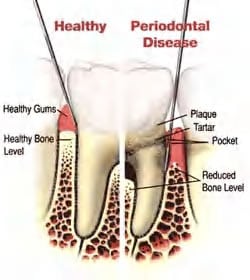
When plaque builds up along the gumline, inflammation develops. The gums begin to pull away from the teeth, forming pockets. As these pockets deepen, oxygen levels decrease, allowing anaerobic bacteria like P. gingivalis to thrive.

This bacterium produces destructive toxins known as gingipains. These toxins break down the bone and soft tissue that anchor the teeth. Although other pathogens contribute to periodontal disease, P. gingivalis appears in most serious cases and acts as a key driver of tissue destruction.

What Did Researchers Discover?

The study identified both the bacteria and their gingipain toxins in the brains of patients with Alzheimer’s disease. The toxins were shown to be neurotoxic, meaning they damage nerve cells.

The bacteria also produce peptides linked to amyloid plaque formation, the same plaques first described in 1906 by Alois Alzheimer. These plaques interfere with normal nerve transmission in the brain.

What Did the Experiments Show?

To better understand the connection, researchers infected the gums of mice with P. gingivalis. The results were significant.

They observed:

  • Migration of the bacteria into the brain tissue
  • Increased production of Aβ1–42, a plaque-associated peptide
  • Brain changes that were consistent with neurodegeneration

This experimental model strengthens the possibility of a biological connection.

How Should the Findings Affect You?

We must avoid overstating the findings. A study showing an association does not automatically establish cause.

However, when gum infection leads to measurable brain changes in animal models, it suggests that chronic periodontal disease may contribute to Alzheimer’s progression. Ongoing research will help clarify the relationship.

For now, this evidence adds another important reason to diagnose and treat gum disease early and thoroughly.

Baton Rouge family dentist Dr. Ryan Perry sponsors this post. Please read about how he strives to provide his patients with the best care possible.

Filed Under: Gum Disease Tagged With: gum disease, gum disease alzheimer's, oral health alzheimer's

Too Much Bleeding During My Dental Hygiene Appointment

Posted on August 29, 2025 by AllSmiles.

I switched to a new dentist in 2024. The first two hygienists who cleaned my teeth were gentle. However, my dental cleaning last week was so aggressive that it hurt, and my gums were bleeding way too much. The hygienist said I had tartar buildup that needed to be removed to prevent the progression of gum disease. Why hadn’t anyone else mentioned this to me? Could I have gum damage from the aggressive cleaning? Thanks. Kirk from Dayton, OH

Kirk,

A quality cleaning primarily focuses on removing calculus (hardened plaque) below the gumline, which can’t be cleaned away in just a few minutes. Ideally, this process should take at least 40 minutes, with many skilled hygienists needing an hour to do the job properly.

While some dental offices might offer brief cleanings that leave teeth looking clean, these rush jobs don’t address the critical buildup beneath the gums, which can lead to long-term oral health issues if neglected.

Why Is Thorough Cleaning Sometimes Painful?

If past hygienists didn’t address the tartar buildup, it’s likely that a thorough cleaning will cause some discomfort and possibly bleeding. The accumulation of hardened deposits irritates the gums, leading to inflammation. Cleaning below the gumline to remove this buildup can trigger bleeding.

Though this can be uncomfortable, it’s a sign that the cleaning is working to remove the buildup and restore your gum health. After a hygienist removes the tartar, the inflammation will subside, and the gums will begin to heal.

Can a Hygienist Damage Your Gums?

A diagram of lower teeth and gums, and areas of early, moderate, and advanced gum disease
Image courtesy of Thousand Oaks Family Dentistry, Thousand Oaks, CA

If plaque buildup hasn’t been properly removed for years by hygienists, it lead to gum disease, which may cause permanent damage to your gums and teeth. Chronic inflammation from plaque buildup can eventually lead to the destruction of the bone that supports your teeth.

Here’s what can happen if the buildup is left untreated:

  • Your gums may bleed when you brush or floss your teeth.
  • Over time, untreated tartar can lead to bone loss, compromising tooth stability.
  • Persistent gum inflammation caused by tartar buildup can lead to receding gums, leaving teeth exposed and vulnerable.

Was Your Last Hygienist Too Aggressive?

It’s unlikely that your hygienist caused permanent damage, but if she was too aggressive, the bleeding you experienced could be the result of soft tissue trauma. This kind of damage heals on its own without leaving permanent marks.

Your current hygienist has done a thorough job, so consider the value of letting her do your future cleanings.


Baton Rouge family dentist Dr. Ryan Perry sponsors this post. Please read about how he strives to provide his patients with the best care possible.
Filed Under: Gum Disease Tagged With: aggressive dental hygienist, dental cleaning blood, dental cleaning hurt, gum disease, teeth tartar

I Have a Tooth Gap from Gum Disease

Posted on January 21, 2025 by AllSmiles.

I have a tooth gap from gum disease between my front left center tooth and the canine. I had braces in my late teens, and my teeth were straight, but now my smile is messed up. I am afraid of what will happen to my teeth. How does a dentist close a gap that results from gum disease? Thanks, Arianna from MI


Arianna,

Periodontal (gum) disease is advanced when it causes your teeth to move. If you have not begun treatment, schedule an appointment with a periodontist for an evaluation.

Why Do Tooth Gaps Form with Gum Disease?

Tooth gaps can form with untreated gum disease. The infection and bacteria cause teeth to separate from their ligaments and supporting bones. The condition will also destroy the bone.  According to the American Academy of Periodontology, a periodontologist (gum specialist) will assign a stage to your gum disease—from initial to severe—and recommend treatment.

What Is the Treatment for Tooth Gaps from Gum Disease?

Teeth with plaque buildup and a dental instrument to remove it for gum disease treatment
Periodontal (gum) disease treatment can prevent teeth from shifting

Treating tooth gaps from gum disease depends on the severity of your case but can include:

  • Deep cleanings – Removing disease from gum pockets
  • Bone graft – Replacing damaged or destroyed bone with grafting material
  • Gum grafts – Replacing destroyed gum tissue with donor material or soft tissue from your palate

Your specialist will explain which treatment combinations you need. Some treatment plans include braces to realign teeth.

Unsavable teeth require removal and replacement with dental implants. A dental bridge may be an option if your budget does not allow you to get dental implants.

We recommend scheduling a consultation with a periodontist and a skilled cosmetic dentist to help restore your oral health and smile.

Baton Rouge family dentist Dr. Ryan Perry sponsors this post. Please read about how he strives to provide his patients with the best care possible.

Filed Under: Gum Disease Tagged With: gum disease, gum disease braces, gum disease tooth gaps, gum disease treatment, missing teeth gum disease, tooth replacement gum disease

Why Are My Teeth Still Falling Out Despite Months of Deep Cleanings?

Posted on November 29, 2024 by AllSmiles.

I had two upper right teeth extracted last year. I got a partial denture to fill in the gaps. In January, my dentist scheduled my deep cleaning every four months instead of every six months, as we did for the past two years. Last week, I lost two more teeth. I’m unsure what deep cleaning should do, but I thought it would help stop tooth loss. I don’t want a mouth full of partial dentures. I live on a fixed income. What are my alternatives for stopping tooth loss? – Thanks. Lamar from TN

Lamar,

Recurring tooth loss often indicates an underlying condition, such as advanced periodontal disease (gum disease). It’s important to note that conventional removable partial dentures can exert additional stress on remaining teeth, potentially leading to further tooth loss.

Illustration of gum diseaseDental implants may be ideal if you still have a few teeth on the left side of your mouth. However, they are a significant investment, typically costing over $3,000 per dental implant.

Another possibility is a Cu-Sil partial denture, which resembles a complete denture but has silicone-lined holes that fit over existing teeth. This design offers enhanced stability compared to traditional partial dentures and allows for easy additions of artificial teeth as needed.

We recommend consulting a periodontist (gum disease specialist) to assess your oral health and discuss treatment to help you control gum disease. Afterward, look for a dentist experienced in tooth replacement options to explain affordable solutions.

Baton Rouge family dentist Dr. Ryan Perry sponsors this post. Please read about how he strives to provide his patients with the best care possible.

Filed Under: Gum Disease Tagged With: deep cleanings, Dental Bridge, gum disease, partial denture, periodontist, teeth falling out, tooth loss

My Deep Cleanings at the Dentist Are Too Painful

Posted on October 22, 2024 by AllSmiles.

I’ve had deep cleanings at the dentist for two years, but my gum pockets are still deep. My teeth are sensitive, so I told the hygienist that I wanted to pause for a few months at the last deep cleaning. The deep cleanings cause so much pain and bleeding. I think it was a mistake to start treatment. – Thanks. Toni from Decatur, GA

Toni,

Your signs and symptoms are caused by severe gum disease, which requires immediate attention to prevent further tooth loss.

Regarding the discomfort you’ve experienced during deep cleaning procedures, it’s important to note that while some discomfort is expected, significant pain is not. Deep cleanings, or scaling and root planing, are typically performed under local anesthesia to minimize pain. The procedure involves removing plaque and tartar buildup from below the gumline, where bacteria can accumulate and cause inflammation.

Post-operative pain can sometimes occur, particularly in cases of severe infection. Your dentist may prescribe antibiotics to help control the disease during treatment.

Given your history of discomfort, consider consulting a periodontist, a gum disease specialist. They have extensive experience treating complex cases and can develop a personalized treatment plan to minimize pain and maximize results.

Remember, addressing gum disease promptly is crucial to preserving your oral health. Seeking professional help and adhering to recommended treatment plans will improve oral health and prevent future complications.

Baton Rouge family dentist Dr. Ryan Perry sponsors this post. Please read about how he strives to provide his patients with the best care possible.

Filed Under: Gum Disease Tagged With: deep cleaning dentist, gum disease, painful deep cleanings

Is Chest Pain Related to a Toothache?

Posted on December 8, 2019 by ectree.

Hello there,

My grandmother is getting up there in age, but she dislikes going to the hospital and distrusts doctors. She’s in good health, but has started complaining of both a toothache and chest pain. She says that the chest pain is not new, but the toothache is.

Is chest pain along with a toothache an issue when you get older? Is it an emergency? Does she need to go to the doctor, or the dentist?

Travis, from Rochester, MA


Hi Travis,

A toothache and chest pain can mean a heart attack. You need to have her checked right away!

In a heart attack, the patient can have pain in the left arm or in the left jaw. Jaw pain is felt in about 10% of the cases. And remember that, due to how nerves travel through the body, everyone’s symptoms can be different. Instead of facial pain, you may experience a toothache, as pain can radiate through the lower left part of jaw, or across the lower arch. Despite your grandmother’s resistance, this is urgent and important.

Dental issues are not limited to the mouth. Good oral health and good cardiovascular health are linked. On the flip side, those with extensive gum disease are at risk for diabetes or cardiovascular disease.

Once your grandmother is better, you should take her to see a family dentist regularly. Regular assessments will cut down on the emergency dental trips, as well.

This blog post is brought to you by Baton Rouge emergency dentist, Dr. Ryan Perry.


Filed Under: Emergency Dentist Tagged With: dental hygiene, distrust doctors, emergency dentist, emergency room, facial pain, good oral health, gum disease, Gum Disease and Heart Disease, Heart Disease, toothache

Can I Use Super Glue to Fix My Smile?

Posted on November 22, 2019 by ectree.

Hi,

My teeth have been loose for ages. One even fell out at the root! I have been gluing my teeth back in place with super glue. However, it smells terrible and has started burning the inside of my mouth. I cannot keep living like this. I want to have a normal life again, and a normal smile.

Hugo from Kansas City, KS


Hi there Hugo,

Teeth only begin to fall out at the root in severely advanced cases of periodontal disease (gum disease). With such a case of periodontitis, the only solution is seeing a dentist. At this point, your dentist would probably recommend bone grafts and dental implants as a solution. Getting dental implants would ease the amount of bone loss to the jaw, and give you your smile back.

Super glue will hold a tooth in place inside the mouth, but only for a short time. After that, the tooth will start to wiggle again. It will not stay, as super glue is not a permanent solution.

For a truly beautiful smile, see a cosmetic dentist. A skilled cosmetic dentist can provide you with dental implants or aesthetic dentures, whichever is best for your situation. However, be sure to factor in the cost of materials and surgery when deciding to get implants. Most cosmetic dentists can provide dental payment plans for patients in need of care but lacking funds. However, a general dentist can also provide a practical, less costly solution.

This blog post is brought to you by Baton Rouge affordable dental implant provider, Dr. Ryan Perry.


Filed Under: Affordable Dental Implants Tagged With: Bone Loss, dental implants cost, gum disease, Periodontal Disease, super glue tooth, tooth fell out at root

How do dentists truly call themselves “affordable?”

Posted on July 26, 2018 by Travis Wachendorf.

I can’t figure out what a truly “affordable dentist” is. A few weeks ago I finally ventured to the dentist after a long time of not going. Honestly, I was in and out of jobs and situations with my family and boyfriend. I didn’t have the money then and really don’t have it now, but I decided I wanted to go anyway. What happens? I went to a dentist who was supposed to be affordable, but they wanted to do an extra treatment on my gums and extra cleaning on my teeth, and then they put fluoride on. Of course they found cavities, so now I have to go back next week. It all costs so much money. So is it just affordable to walk in the door?

Gina, Asheville, NC

Dear Gina,

That’s really frustrating to finally decide to spend the money on something so important, your oral health, only to find it wasn’t as affordable as you expected. Unfortunately, when you return to the dentist after a long hiatus, there is extra work that is sometimes required to treat your mouth and get it healthy.

Why do affordable dentists do extra work in your mouth?

The treatment on your gums is to help alleviate or ward off any gum disease.  Gum disease can affect not only your gums and teeth, but also the bones that hold your teeth in place. If left unchecked, in extreme cases, you could lose your teeth.

Your dental team was trying to help prevent cavities by treating your teeth with fluoride. Fluoride applied to your teeth at the dentist’s office is a higher concentration than that found in toothpastes and mouthwashes from the store. If you can prevent more cavities from forming, it will save you in the long run.

The unusual thing about your appointment is that the staff didn’t ask you before they started those treatments. Most offices have a protocol to ask before performing any treatment that will cost additional.

You were smart to search for an affordable dentist the first time. There are dentists who will do a free exam or first appointment to assess the health of your mouth, make a treatment plan with you, and discuss your options and prices so you know what to expect before you start. They may even be able to work with you on a payment plan. Call the dentists’ offices you are interested in and ask questions before your appointment. That way you won’t end up paying unexpected amounts, but you can still get the care you deserve.

This post is sponsored by Dr. Ryan Perry at Baton Rouge Family Dentist.

Filed Under: Affordable Dentist Tagged With: Affordable Dentist, fluoride, free dental exam, gum disease, oral health, Oral Hygiene

Think I’m Being Nickel and Dime’d to Death by My “Affordable Dentist”

Posted on February 14, 2017 by writeradmin.

I intentionally chose an affordable dentist out of a directory because I do not have dental insurance. I’m a little behind on my regular checkups, so I expected to run into some snags, but I was totally unprepared for the total bill. First off, they charged me for a more expensive “deep” cleaning and for some kind or rinse or medication that was applied during it. On top of this, they hit me for two different kinds of x-rays, and then they recommended I get a fluoride treatment and come back in a few weeks for a follow-up visit with the hygienist, which also has a charge. I’m already out a few hundred bucks, and this doesn’t even include the fillings I need to have done. Does this sound right coming from an “affordable dentist?”

Javi – New Jersey

Dear Javi,

An affordable dentist is usually one who either has lower prices or works with you to find the most affordable treatment in your budget. Sometimes, when you’ve been away from the dentist for a long time, it is a little pricey at first. This is actually designed to save you money in the long run. If they can get your smile healthy, it will keep you from need expensive repairs or from losing your teeth.

As for the things you were charged for, a deep cleaning is fairly common when it has been a while since your last cleaning. If your gums were inflamed and you had a lot of buildup, the hygienist probably did what’s known as a full mouth debridement. If you had periodontal disease, you may have received scaling and root planing. In either case, a follow-up appointment is fairly typical. They want to see if your oral health improves or whether you may need additional treatment. Sometimes, a deep cleaning can be enough to set you on the path to good oral health, but if you’ve been struggling for a while, you may need more help. You will have to talk to the hygienist or someone in the office to find out what kind of cleaning was done and why they felt it was necessary, but nothing seems out of order with that.

As far as the x-rays go, those sound standard as well, as even an affordable dentist needs them to make a full diagnosis. It’s typical to have a panoramic, which shows your whole mouth and jaw, taken every few years. Bite wings, a set of four, let the dentist see between your teeth and catch decay. Those are often done on an annual basis.

The cleaning solution and the fluoride are personal choices. Because you’ve been struggling with either gingivitis or periodontal disease, killing all the bacteria with a medicated rinse is helpful. Some offices charge for this service and some do not. The fluoride was likely recommended to help prevent decay, though it’s sometimes offered to adults with sensitive teeth, too.

Going forward, it might be best for you to have a discussion with the office staff before a visit, so you know what to expect in terms of procedures and costs. You can also pick up a good dental plan from a reputable company for a yearly cost that’s on par with the costs of your regular checkups, and usually covers them entirely. It won’t help you with the visit you’ve already had, but it can help turn any dentist into an affordable dentist in the future.

Almost all affordable dentists have payment plan options so that should help.

This blog is brought to you by Dr. Ryan Perry.

Filed Under: Affordable Dentist Tagged With: affording dental care, Baton Rouge Affordable Dentist, Baton Rouge Dentist, dental x-rays, fluoride treatments, gum disease

My Mom’s Breath Stinks

Posted on December 29, 2011 by ddrowns.

I don’t know if me telling my mother that her breath stinks is the best idea. Every time she talks to my face directly I smell it. I find myself ducking my head or moving my head to the side. I feel bad when she asks me, “What’s wrong Honey”? She brushes her teeth twice a day and uses the fanciest toothpastes. She chews gum and has mints on a regular basis but it does not seem to make a difference. Her bad breath is so strong, it over comes the mint, smelling like bad breath with a small hint of mint. I don’t think she realizes how bad her breath is. Can you help me?

Thanks Stacy,

Dear Stacy,

The best way to handle this is to be honest, show concern, and let your mother know. If you are noticing her bad breath so are her friends and coworkers. One of the main causes of bad breath is gum disease which is an infection of the tissues and bone surrounding the teeth. Signs and symptoms of gum disease besides bad breath are gums that are red, swollen, and bleed easily as well as pain in the teeth. If gum disease has been left untreated for sometime teeth start to shift and become loose in the socket.

Gum Disease is the major cause of tooth loss and is quite common among the adult population, especially when dental checkups are avoided on a regular basis. Besides the possibility of losing one’s teeth due to gum disease it also causes other health issues like heart disease, diabetes, and chronic inflammatory diseases. Gum Disease is very treatable, especially in the early stages and one can keep their teeth for the remainder of their life with good hygiene and frequent dental cleanings.

We recommend you discuss this issue with your mother and advise her to make an appointment for a dental exam to see if she does indeed have gum disease. If she is in the early stages of the disease her dentist will recommend a deeper cleaning to remove all the bacteria off of her teeth which will stop the disease from causing more damage to her surrounding tissues and bone however if she has severe gum disease he may recommend her to go see a periodontist who specializes in the treatment of this disease for further treatment. Once the disease is treated good oral hygiene and visiting your dentist on a regular basis are vital in order to keep the disease from progressing.

Post courtesy of Dr. Perry, Baton Rouge Dentist.

Filed Under: Oral Hygiene Tagged With: Bad Breath, Bleeding Gums, Dental Pain, gum disease, Gum Infection, Oral Hygiene, Periodontal Disease

Phone number: 225-275-5910
9094 Jefferson Hwy
Baton Rouge, LA 70809
Ryan P. Perry, DDS
Phone: 225-275-5910
Ryan P. Perry, DDS
9094 Jefferson Hwy Baton Rouge, LA 70809
Google Reviews Yelp Reviews
  • Best Baton Rouge Dentist
  • Baton Rouge Affordable Dentist
  • Privacy Policy
  • Blog

©2009-2026 Ryan P. Perry, DDS • All rights reserved
Website Design and SEO by Infinity Dental Web IDW Copyright Logo

  • Home
  • About Us
    • About Our Office
    • Meet Dr. Perry
    • Request an Appointment
    • Office Hours
    • Map and Directions
    • Financial Policies
    • Free Initial Exam
  • Payment
  • Cosmetic Dentistry
    • Porcelain Veneers
    • Porcelain Crowns
    • Teeth Whitening
    • Dental Bonding
    • CEREC Crowns
    • White Fillings
  • ^
  • General Dentistry
    • Gum Disease
    • Root Canal Treatment
    • TMJ Dentist
    • Mercury Free Dentist
    • Gentle Dentistry
    • Emergency Dentist
    • Sedation Dentist
    • Pediatric Dentistry
    • Sleep Apnea
  • Reconstructive Services
    • Dental Implants
    • Dental Implants Cost
    • Affordable Dental Implants
    • Dental Bridges
    • Dental Bridge vs Implant
    • Dentures
  • Click to Call
    (225) 275-5910